Valcona Sottana and the teacher who sang her way home
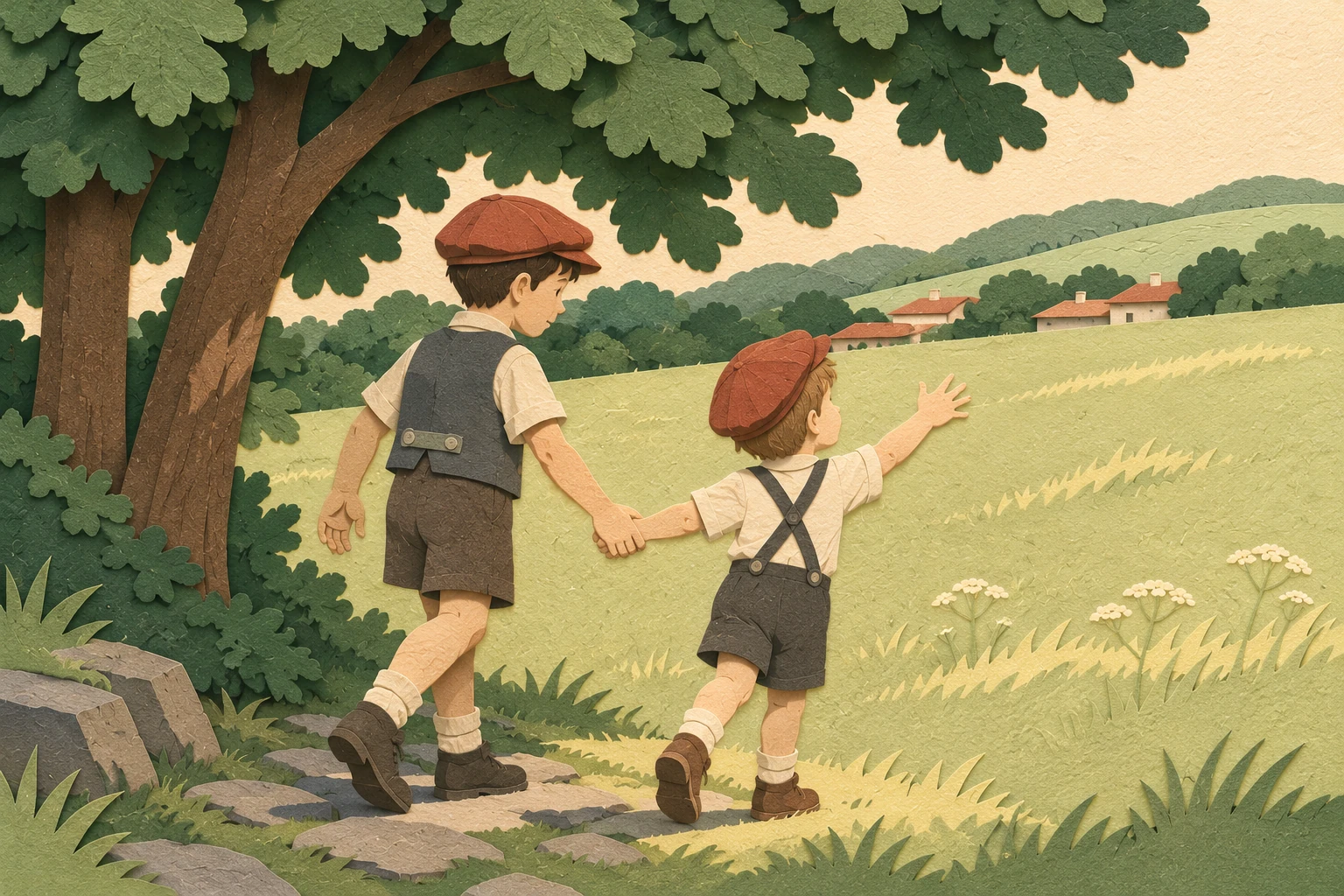
After walking the children home to Le Salse, Ginita Bruno would linger a little at their mothers’ doors. With luck, someone else would be heading back to Valcona. She dreaded going through the Aschei and Nerci woods on her own. When she finally set off, she walked fast and sang loudly.
Ginita, who had come from the city to teach at Valcona Sottana, remembered two of her pupils with particular affection. In the mornings Nando, aged seven, would come out of the woods holding four-year-old Angelo by the hand.
To get to their hamlet from Mendatica, you cross the San Bernardo pass into the Tanarello valley in the Ligurian Alps. At 1,235 metres, an old mule track runs between two rows of houses on the edge of a meadow. In the summers of 1958 and 1959, children came here from Le Salse, Pigheugia, Barchei, Tecciu Veggiu and the neighbouring hamlet of Valcona Soprana.
The priest’s little Fiat
The priest drove up from Mendatica with his Fiat Topolino full of food. He unloaded it, went on to Le Salse and came back with seven or eight children’s heads poking out of the open top. Ginita and her fellow teacher, Liliana, had one room for everything. The children ate there, did their schoolwork there and crowded in when it rained. The stove was outside under a lean-to.
In the evening the mothers at Le Salse often had something for whoever had walked the children home. Sometimes it was fried bread or potato pie, sometimes mushrooms for the next day’s lunch. Back in Valcona people gathered after supper by the haystacks. If there was moonlight they played tuccu, the local name for hide-and-seek.
Giuliana’s boundary stones
The outside stairs along the mule track led up to the rooms where the families cooked and slept. Downstairs there was space for animals and stores. Each house was a teccio. Several of them together, with a shared oven, a threshing floor and a chapel, made up what people in Mendatica call a malga. On a map from 1736 there is a single word beside the mark for the settlement, “Valcona”. Today there are two names. Valcona Sottana is the lower hamlet and Soprana is its neighbour up the slope.
Some of the roofing stone was quarried on the approach to Valcona, at a place called Boscu da Sepaa. Secondo Pelassa remembered how the men made a ciappa, a roofing slab. They had to find the grain of the stone, split the block in half and keep halving the slabs until they were about three centimetres thick. For the gutter they took a length of larch, stripped the outer wood with a hatchet and hollowed a channel in the red heartwood with a gouge.
When Giuliana Saldo talked about her summers as a girl, she often came back to the journey she made with her mule. She would leave Valcona at first light, taking food to her father in the Valle dei Maestri. On the return journey the mule carried cheese. Emidia Lantrua, who wrote down Giuliana’s memories, recalled how the girl used to look for the boundary stones among the grass and rocks. She wanted to remember where each pasture ended for the day when she would have to take the sheep out on her own. She still spent her summers in Valcona as an old woman. Holidaymakers came to her to learn to bake bread, make cheese or tell which wild plants they could eat.
In Mendatica and Cosio there was some grumbling about the fine high pastures that belonged to neighbouring Montegrosso. Someone in power had done them a good turn, the story went. The ethnographer ’Ada Acovitsioti-Hameau heard the other side in Montegrosso. It was envy, people there said, particularly on the part of those who had to look at all that good grass and take their flocks elsewhere.
Even the two Valconas had separate teams in Mendatica’s goat race, the Palio delle Capre. Paola Gandolfo and Giovanna Lanteri remembered the early races, around 1969, when six herding settlements competed. One obstacle was a narrow plank laid across a tank of water. Of the goat and the shepherd trying to get it across, the two women recalled, the shepherd was the likelier to fall in.
The house Gino came back to see
In November 1944 Gino Glorio, a Resistance fighter known as Magnesia, came back up to Valcona. The house where he had once waited out a July thunderstorm was still standing. He had spent nine days there in September while Dr Gianfrancesco De Marchi treated wounded partisans. Outside the house, Gino found himself wondering what had become of the women who had looked after them. One was so skilful he thought she must have trained as a nurse. He was trying to remember her name. Silvana, he thought.
Pierina Pelassa, a shepherd from Mendatica, wrote in her notebook that the partisans also kept their food stores in the lower hamlet. She remembered one evening during the German advance that October. The fog was thick and local men were guiding the partisans away with lanterns held between their teeth. The wounded were taken to Upega, where Silvio Bonfante, known as Cion, died on 17 October.
On 31 March 1945 German troops set fire to both Valconas. At first light the next morning, Easter Sunday, the families set out from Mendatica in the hope of putting out the fires in their houses. From the San Bernardo pass they could already see the smoke. Pierina noted that one oven survived and stayed in use. By 1946–47 she could count six flocks of sheep in the lower hamlet alone.
From the fountain to the upper village
In July 2022 the reporter Davide Avena met Sandro Rossignoli here. Sandro had moved to Valcona and had a bed for visitors who wanted to spend the night. Just a year earlier the census had recorded thirty-one homes and no registered residents. That August the park put Valcona on its programme for an evening of stargazing.
From the fountain you can follow the lane past the outside stairs of the tecci to the chapel. The parish says the shepherds built it and dedicated it to Mary’s visit to Elizabeth. The feast of the Visitation falls in May. Valcona traditionally waits until 15 August to celebrate, when the families would have been up on the pastures. In the heritage register you’ll find the chapel under another name, Madonna Bambina, the Infant Mary.
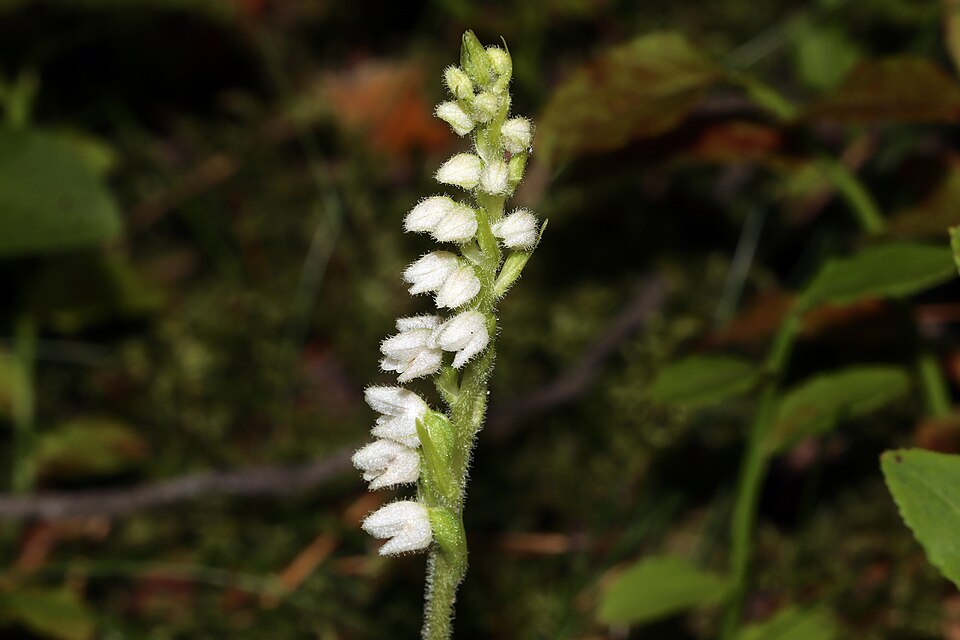
A small woodland orchid called Goodyera repens grows at nearby Valcona Secate. Umberto Ferrando photographed it in August, close enough to show the fine hairs on the white flowers. Beside the road up to Soprana, botanist Mauro Ottonello spotted a patch of more than a hundred hawkweeds under the Scots pines. His colleague Günter Gottschlich identified them as Pilosella piloselloides subsp. obscura.
To walk up to Soprana, pick up the old stone-paved path just above the road. It climbs to Pigheugia, one of the hamlets Ginita’s pupils walked from. Keep left at the white wayside shrine. From the lower village to the houses in the upper one takes about half an hour.
Before you set out
From Mendatica, the road goes by way of San Bernardo, Monesi and Piaggia. On the Piaggia side, look for the turning to Valcona Sottana in the direction of Le Salse. The hamlet is at 44.09561° N, 7.75054° E.
For a walk up from the valley, start at the medieval bridge over the Tanarello, at 1,041 metres. The path follows the river upstream, enters the woods and fords the Rio di Valcona. The park allows about 45 minutes uphill from the bridge to the houses. After rain, ask locally about the ford.
A winter road order effective from 9 November 2026 closes the SP 154 to vehicles between Rio Giairello and Le Salse, from kilometre 20.6 to 23.7, until further notice. Check the provincial road notices or ask Mendatica’s visitor office which approach is open on your travel date. For a look inside the chapel or the time of the August celebration, ask the parish.
Sources, photographs and visitor links
- Plan your visit · Village map · Walk from the bridge and up to Soprana · The bridge in the archaeological catalogue · Provincial road notices · Winter 2026 order · Visitor office · Parish
- Valcona in pictures · The summer school in the late 1950s, photograph on p. 14 · The hamlet in autumn, in the park’s gallery · Davide Avena’s winter film, 2021 · The summer visit to Sandro Rossignoli, 2022
- The people who told the stories · Ginita Bruno on teaching in Valcona, pp. 63–65 · Secondo Pelassa on stone roofs and wooden gutters, p. 31 · Emidia Lantrua remembers Giuliana Saldo · ’Ada Acovitsioti-Hameau on pasture rights and village gossip, pp. 641–643 and notes 14–15 · Paola Gandolfo and Giovanna Lanteri remember the goat race
- Wartime diaries and maps · Gino Glorio’s diary, part II, pp. 35–38 · From Pierina Pelassa’s notebook · Province of Imperia, the retreat to Upega · ANPI’s biography of Silvio Bonfante
-
Reading the landscape · The local association on the herders’ houses · Valcona on the map of 1736, fig. 3b · Chapel register entry 07/00210651 · The hawkweed record, Acta Plantarum Notes 8 · ISTAT locality census · The park’s 2022 stargazing evening · The fountain in the local guide
-
Explore further · Pigoggia and the children between the two Valconas · Madonna Bambina, the chapel at Valcona Sottana
Photographs and credits
Nando and Angelo on their way to school, from their teacher Ginita Bruno’s recollection. Opening illustration in cut paper, made with ImageGen for mendatica.com. Ginita Bruno, La scuola estiva.
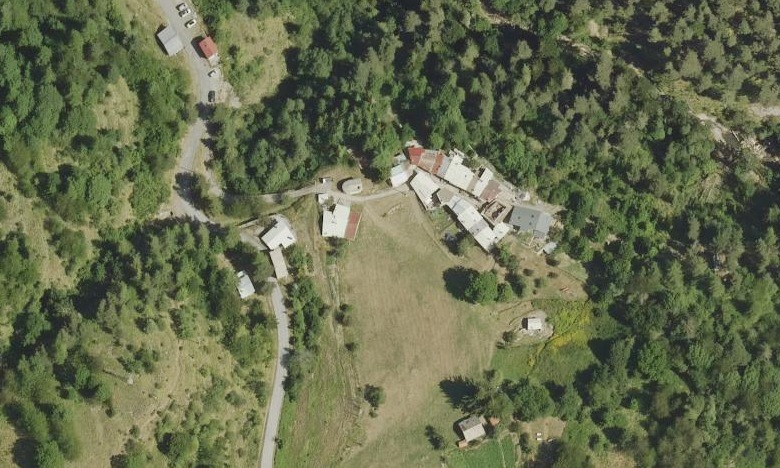
- Valcona Sottana from the air. The houses follow the edge of the meadow. Aerial photograph from the 2022 survey, © AGEA. Tiles joined and cropped for this page. CC BY 4.0.
- The orchid at Valcona Secate. Umberto Ferrando photographed this Goodyera repens at 1,260 metres on 10 August 2019. Full frame, resized. CC BY 2.0.
