Tetto Vecchio, a hamlet on the way to school
When Ginita Bruno described the summer school she ran at Valcona Sottana, she named the five outlying settlements her pupils came from. Between Le Salse and Barchei she put Tecciu veggiu. This was in the summers of 1958 and 1959. The municipality spells it Tetto Vecchio and counts it among Mendatica’s smaller localities. To Ginita it meant the homes of some of the children who came to her for the day.
Moving up for summer
A teccio hereabouts was a house used during the grazing season. Going up to the pastures meant moving much of family life up the valley too. Consider what that involved for a schoolchild. The adults went out to work. A child needed to get to the place where someone would make lunch, where the other children waited and where there was room to do lessons when the rain came down.
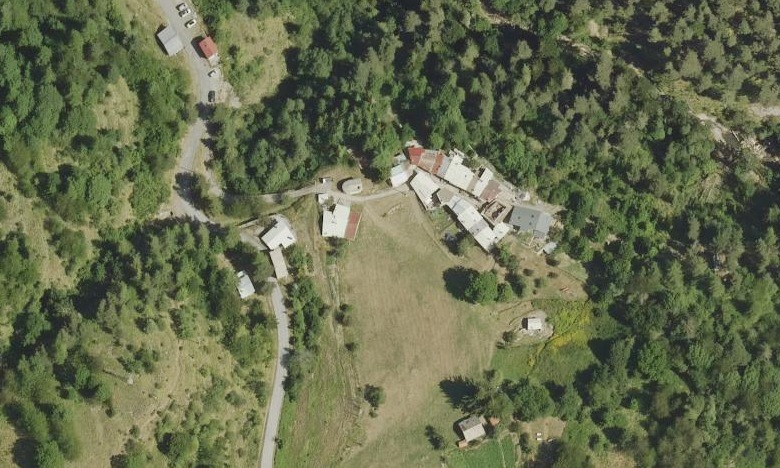
That destination is still easy to see. The houses of Valcona Sottana stand at the edge of a meadow below the road to upper Valcona. There is even a photograph of the summer school in the local book Il bianco della cenere. One room served as classroom and dining room. For Ginita’s pupils, Tecciu Veggiu belonged to an everyday geography that also took in Pigheugia and the other places from which children made their way to that one room.
The name in Pierina’s notebook
Only a few years earlier the buildings in this valley had served a different purpose. In the summer of 1944 the partisans ran a hospital at lower Valcona and lodged their men in several settlements. Pierina Pelassa, who knew the district from her years as a shepherd, wrote down where people stayed. Some were at the houses of Sepà. Others stayed at upper Valcona, San Bernardo, Le Salse and a place she called Teciu Veggio. To someone trying to find beds for a large number of people, even these little groups of houses counted.
The three spellings still turn up in quite different places. Tetto Vecchio is the municipality’s form. The local association lists Tecciu Veggiu among the old summer settlements. Pierina’s Teciu Veggio comes from her account of the war. Between them, Pierina and Ginita tell us who had reason to come and go here in two different decades. Neither identifies a particular family’s house or traces the exact path the children took each morning.
Walking in the school valley
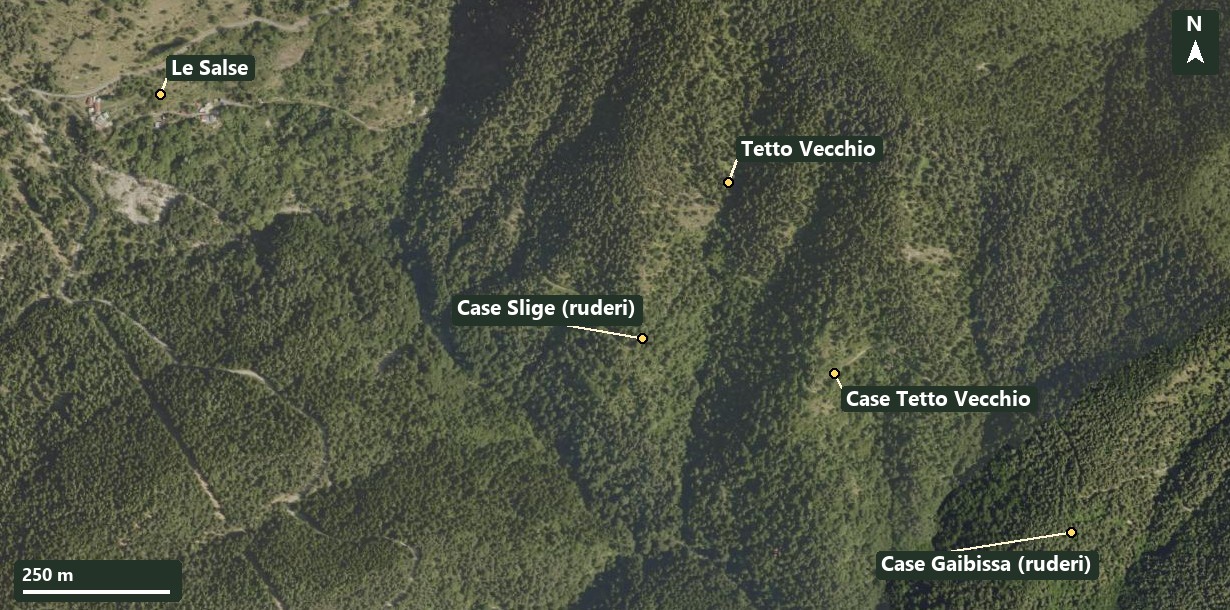
The easiest place to begin is at the end of their journey. In Valcona Sottana you can walk between the meadow and the outside stairs of the old herders’ houses. The park itinerary then climbs the stone-paved path to Pigheugia, another of Ginita’s settlements, and continues to upper Valcona. To find the place some of the children left each morning, open the regional map. The name appears twice. Tetto Vecchio denotes an area on the hillside. About 370 metres south-east, Case Tetto Vecchio pinpoints the houses (44.10636° N, 7.75431° E). Just to the west are the ruins of Le Sligge. The surveyors distinguished the two settlements, much as the families who lived here did. Somewhere between the point on the map and the schoolroom door lies the part of the story Ginita left to the children themselves, the route they took on their own.
Sources and further reading
- Regione Liguria, Toponomastica CTR 2007–2013, 1:5.000
- Municipal statute, art. 4
- Pro Loco Mendatica, the herding settlements
- Pierina Pelassa’s notebook
- Ginita Bruno’s summer school, pp. 63–65
- Photograph of the school, p. 14
-
Explore further · Le Sligge, the hamlet east of Le Salse · Valcona Sottana and the teacher who sang her way home
Photographs and credits
Valcona Sottana, the site of the summer school. Aerial survey from 2022, tiles joined and cropped. © AGEA, CC BY 4.0.
Map prepared for this guide using names and positions from Regione Liguria’s 2007–2013 topographic survey (CC BY). Aerial imagery © AGEA, 2022 flight, CC BY 4.0. Tiles joined, cropped and annotated.
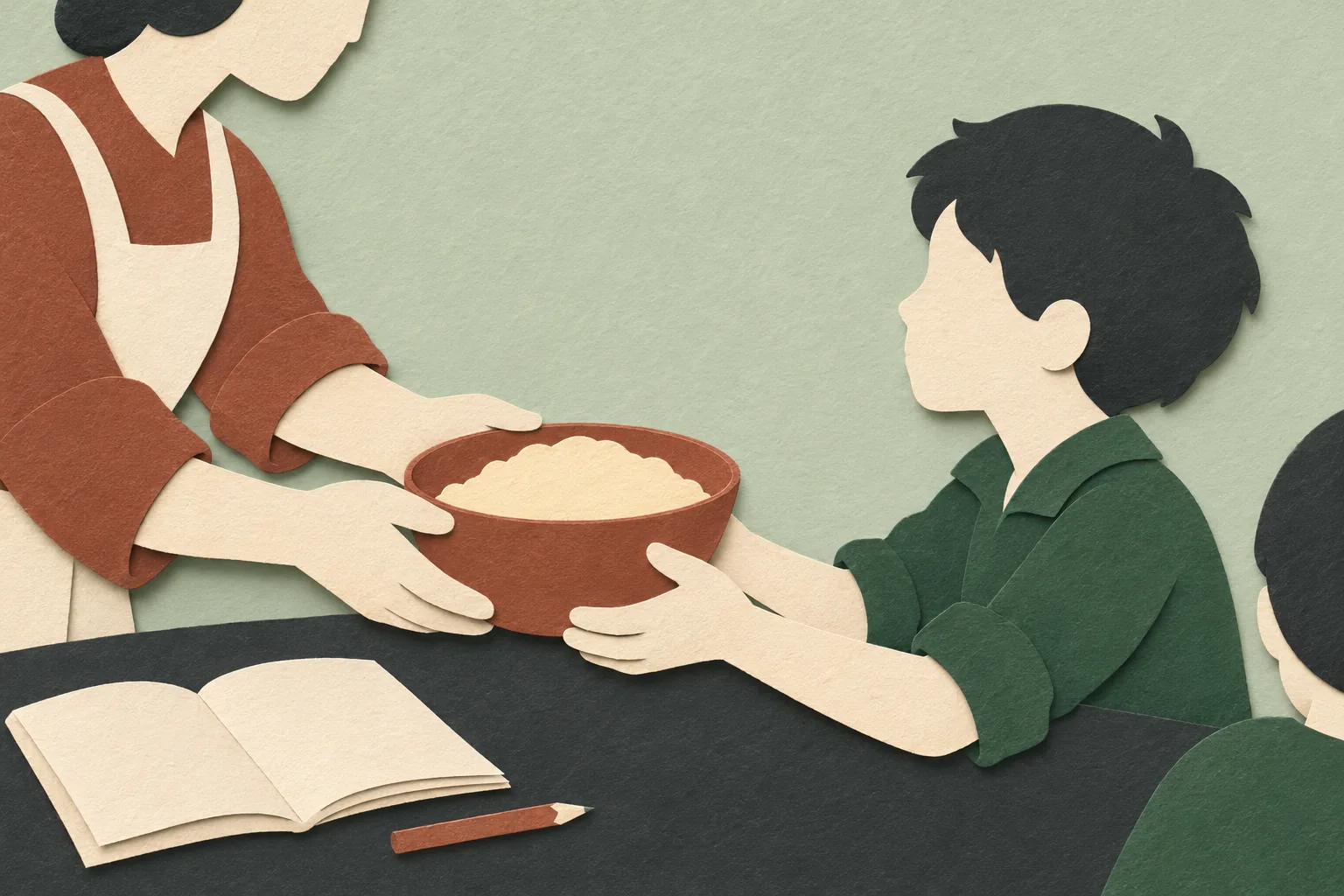
Cover · Lunch at the Valcona Sottana summer school, also attended by children from Tecciu Veggiu. An interpretation of teacher Ginita Bruno’s recollection. Illustration · mendatica.com, ImageGen.