
Pornassio and the Colle di Nava, from shop counters to a mountain pass
Beside some of the doorways in Ponti di Pornassio is a smaller opening with a shelf of black stone underneath. Local tradition, recorded by the council, has these as counters where craftspeople displayed their wares. Look near the chapel of San Bernardo in Piazza Vecchia, then by the bridge over the Rian di Becchi. Down here people did business on their own doorsteps. Higher up, where the road leaves the Ligurian slope and turns towards the Tanaro, an entire group of forts records how much it once mattered who could cross this mountain.
Pornassio is spread over several settlements. The little square in Ponti stands at 392 metres. The SS28 runs through San Luigi, home to the town hall and the roadside chapel of San Luigi Gonzaga. A provincial road branches off to Villa and Ponti. To see both wine-growing Pornassio and the fortifications above it, mark two separate places on the map, Villa and the Colle di Nava.
A stonemason from across the mountains
At Villa, about 515 metres above sea level, the castle and parish church of San Dalmazzo stand on a spur. The council credits this hamlet with much of Pornassio’s wine production. Alongside the reds made from the Ormeasco grape there is Sciac-trà. Brief contact with the grape skins gives this local wine its coral-pink colour.
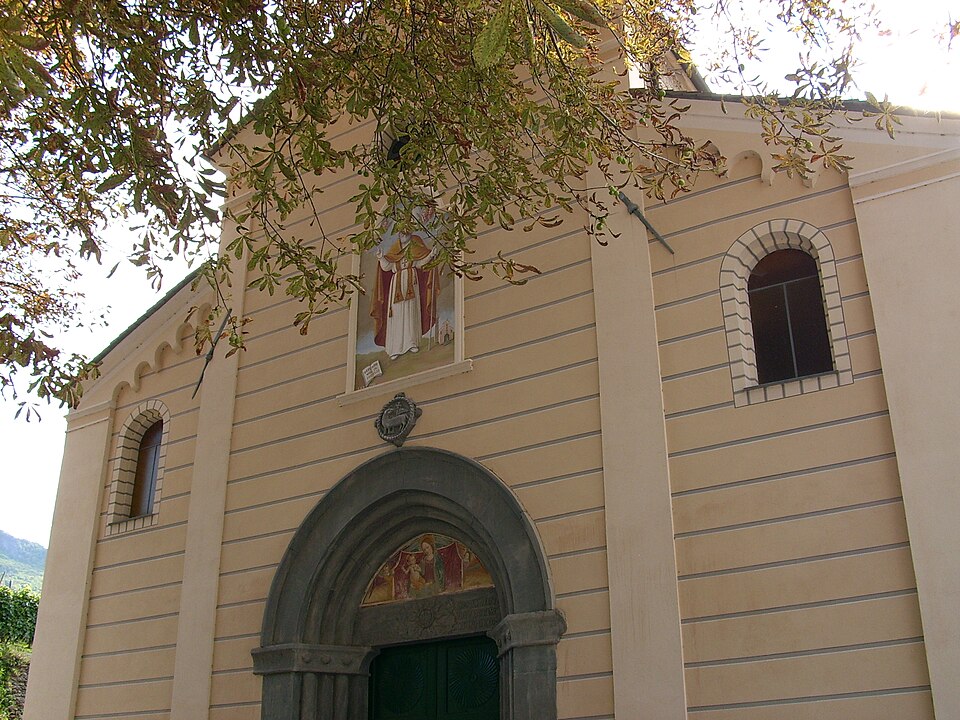
At San Dalmazzo, start with the carved lintel dated 1445. The council names the maker of the doorway as Antonio Bruneto of Garessio, across the mountains. The Madonna and Child painted in the lunette above is attributed to Giovanni Canavesio. Both are visible from the churchyard. If the church is open, look for the capital of a black stone column bearing another date, 1448. The parish of San Dalmazzo is the contact for an interior visit.
A road back to Mendatica
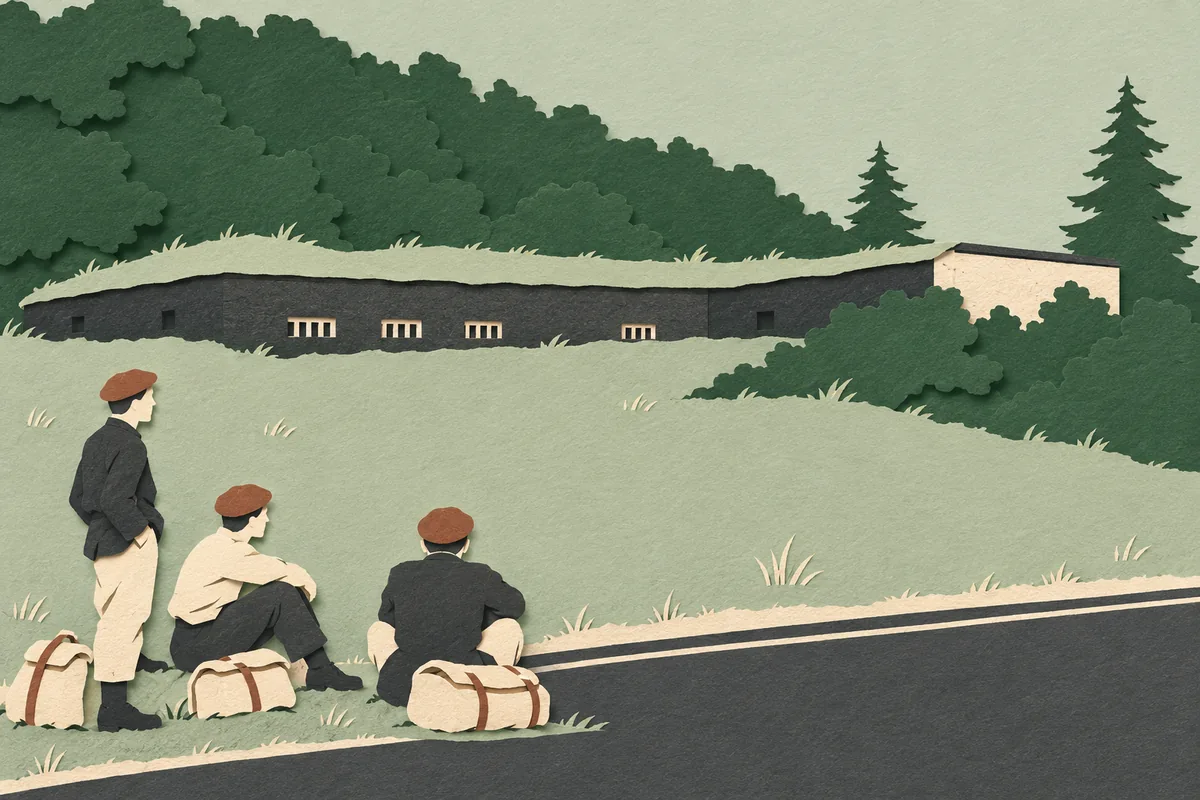
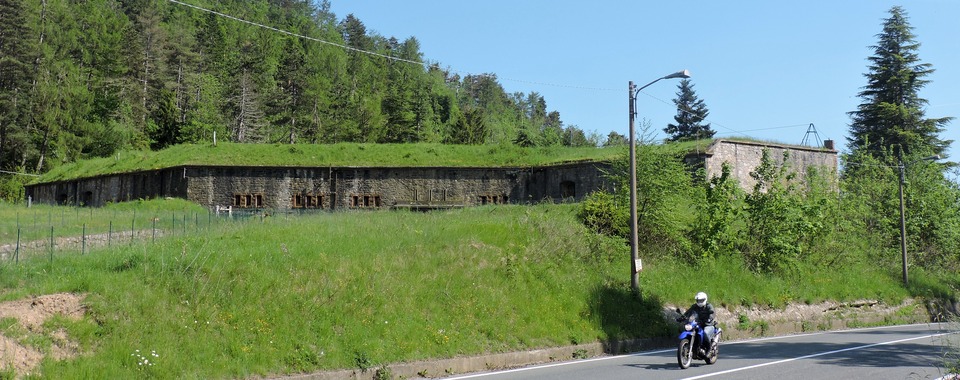
The main road climbs to the Colle di Nava, still in the municipality of Pornassio. The park puts the pass at 934 metres. The council gives 933 for the car park where its walking routes begin. The Forte Centrale comes into view from the road, long and low behind a grassy bank. It belongs to a group of nineteenth-century fortifications built after Italian unification. The town’s history records that in 1935 infantrymen of the Cosseria division were quartered here and at Forte Bellarasco before leaving for the war in Ethiopia. Men waiting to embark at Naples once passed through what is now a starting point for country walks.
For access to Forte Centrale, contact Nava’s IAT tourist office on +39 0183 325501 and ask about your chosen date. For a walk with a destination, follow stage seven of the Alta Via dei Monti Liguri to San Bernardo di Mendatica, the settlement on the pass above Mendatica village. From Nava the way leads past Forte Pozzanghi, Colla dei Boschetti and Colla del Fieno. The park allows three hours uphill to San Bernardo and two and a half in the other direction, along woodland tracks and paths with a short stretch of provincial road. These are one-way times. If you are staying in Mendatica village, the descent from San Bernardo still lies ahead.
Maps and sources
- Pornassio council on Ponti, San Luigi, Villa and Nava
- Pornassio council on San Dalmazzo
- Upper valley parishes, San Dalmazzo contacts
- Liguria regional wine centre, Ormeasco and Sciac-trà
- Pornassio council on the forts and the Cosseria infantry
- Ministry of Culture, 2025 agreement on the Forte Centrale
- Pornassio council, walking routes and starting points
- Pro Loco, Nava tourist office at Forte Centrale
- Alpi Liguri park, stage 7 and San Bernardo–Nava route map
- Map of San Dalmazzo in Villa
- Map of Forte Centrale at the pass
Elsewhere in the guide · San Bernardo di Mendatica · Pieve di Teco
Photographs and credits
- San Dalmazzo in Villa, part of Pornassio. Davide Papalini, 2 September 2007. Original photograph · CC BY 2.5. Resized to 960 pixels wide.
-
Forte Centrale at the Colle di Nava, seen from the road. Pampuco, 2 June 2019. Original photograph · CC BY-SA 4.0. Resized to 960 pixels wide and converted from PNG to JPEG.
-
Cover · Paper-cut interpretation of the Cosseria infantry waiting at Nava in 1935. The outline of the fort adapts a photograph by Pampuco. Photograph and adaptation licensed under CC BY-SA 4.0. ImageGen, mendatica.com.

