Bauso and the stone that roofed Monesi

Luciano Corrado’s memories of Monesi begin in the summer of 1950, when he was five and his grandparents were shepherds. In this hamlet in the Tanarello valley he counted some thirty tecci, the stone houses where families kept their livestock, hay and winter stores. He could trace a roof back to two places. The larch beams came from the woods nearby. The slabs laid over them came from u Bausu, downhill from Monesi di Mendatica.
Secondo Pelassa explained how the quarrymen made those slabs, known locally as ciappe. They cleared the soil and the top layer of rock to reach the slate beneath. Working with the grain, they split a block in half, then halved the pieces again until each slab was about three centimetres thick. Someone buying slate for a roof ordered it by the cannella, a measure Pelassa still remembered.
Pelassa named two large quarries in the territory of Mendatica. One was at u Bausu, the other in the Boscu da Sepaa woods on the approach to Valcona Sottana. Corrado, recalling the roofs at Monesi, counted three quarries at u Bausu itself. The accounts agree on where the roofing stone came from. How many workings there were at Bauso remains an open question.
The fields below Monesi
Mendatica’s municipal charter spells the name Bauso. The Pro Loco, Mendatica’s local tourism association, calls it Bausu in its list of former summer farming settlements, or malghe. Writing for the association in 2024, Federico Manera described the remains of two small groups of houses down towards the valley floor. Alongside u Bausu he named a second settlement, a Valle. His account tells us what people grew around the two hamlets, though which fields belonged to each is still unclear.
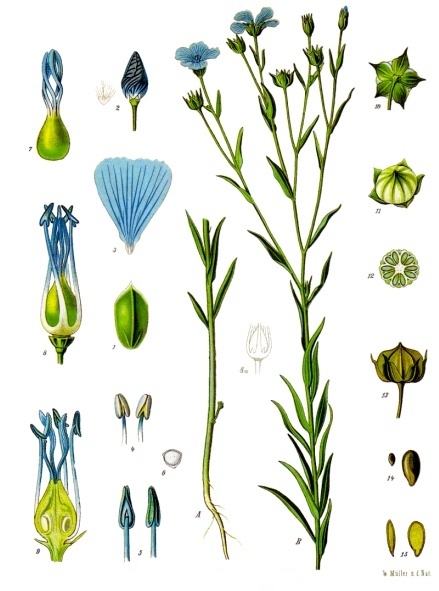
People here grew flax and hemp. Manera remembered flax as a plant farmers also used to treat their animals. Hemp had a different place in a shepherd’s life. Woven together with wool, much of it locally supplied by Brigasca sheep, it made stamegna, a heavy cloth that kept out the rain. A shepherd could wear it as a cape. The same cloth made blankets.
On the regional map the names turn up close together. North-east of Monesi the surveyors marked Case Valle. About 400 metres farther north they placed Rocca del Bausu. Look for that pair of names to make sense of the hillside. The second labels an area. The map leaves the boundaries of the slate workings open.
Inside a shepherd’s house
In Mendatica village you can arrange a visit to the Casa del Pastore, a museum laid out like one of the summer houses. A staircase of stone and wood leads up from the stable to a kitchen with a hearth in the middle of the room. In the bedroom just beyond it, the museum guide describes a wooden bed with a mattress stuffed with sheep’s wool and thick blankets for cold nights.
Families in Mendatica have also kept clothing handed down through the generations. Pieces from the local collection have appeared in exhibitions and processions at the Festa della Transumanza, the festival marking the seasonal movement of livestock. Ask the village visitor office about the next chance to see the clothes. For a visit to the valley itself, take both names, u Bausu and a Valle, and ask which remains can be identified and reached. The written accounts place the houses downhill from Monesi but give no precise route to the quarry or to a Valle.
Sources and visitor information
- Regione Liguria, CTR 1:5000, 2007–2013
- Secondo Pelassa on splitting roofing slate, p. 31, and Luciano Corrado’s Monesi memoir in Trucioli, 27 February 2025.
- Municipality of Mendatica, charter, article 4. Federico Manera for the Pro Loco, the two settlements below Monesi and Mendatica’s summer hamlets.
- PROBIODIV, the shepherd’s house and traditional clothing in Mendatica, pp. 98–99. Pro Loco, the village museums and the visitor office.
-
Explore further · Monesi di Mendatica, before the chairlift · The Shepherd’s House and the pail held between the knees
Photographs and credits
Cultivated flax, Linum usitatissimum. Nineteenth-century botanical plate by Walther Otto Müller from Köhler’s Medizinal-Pflanzen. Public domain. Reproduced in full without alteration. Illustration record on Wikimedia Commons

Cover · Lifting a freshly split roofing slate. An interpretation of Secondo Pelassa’s account of the quarry work. Illustration · mendatica.com, ImageGen.